
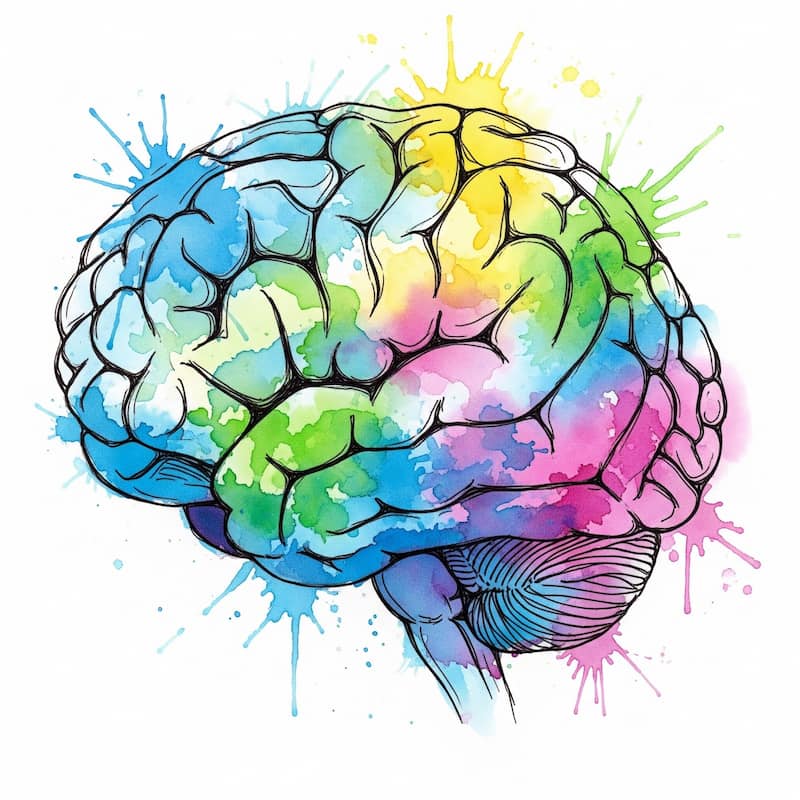
Traumatic brain injury (TBI) is a “silent epidemic” among those involved in the justice system. Systematic reviews show that 25% to 87% of incarcerated individuals have a history of TBI, often involving loss of consciousness and lasting cognitive changes.
The link between TBI and crime is localized in the frontal and temporal lobes, the brain’s executive centers responsible for social behavior, moral choice, and impulse control. Damage to these areas compromises the mind’s “braking system,” resulting in behaviors that are often categorized as criminal not due to inherent malice, but as a direct symptom of neurological failure.
Damage to the right uncinate fasciculus, a white matter pathway connecting the emotional limbic system and the decision-making prefrontal cortex, is a key predictor of post-injury criminal behavior. This damage severs the communication between the “thinking” and “feeling” parts of the brain, leading to impaired empathy, poor impulse control, and difficulty anticipating consequences. This biological basis for “acquired criminality” is most evident in individuals who become criminal only after their brain injury.
Research has distinguished between two types of executive functioning that are differentially affected by TBI, including “cold” (purely cognitive, non-affective, abstract tasks) and “hot” (emotional, intuitive, reward/punishment situations). Studies show incarcerated individuals with orbitofrontal lesions often perform well on “cold” but poorly on “hot” executive tasks. This results in an “invisible” disability: while an inmate may present as intelligent and capable in a standard clinical setting or in an assessment, they may become disinhibited and reckless in the emotionally charged atmosphere of a prison yard. This split explains why many TBI survivors are labeled as “uncooperative” or “manipulative” by correctional staff; the staff sees the “cold” cognitive ability and assumes the failure in “hot” behavioral regulation is a choice rather than a deficit. TBI-related deficits in attention, memory, and information processing may be misinterpreted. An inmate who fails to respond immediately to an order may not be defiantly non-compliant, but may have a slowed verbal response or a memory deficit that prevents them from recalling complex rules. Similarly, irritability and poor anger control can lead to spontaneous outbursts.
Competency to stand trial may be questioned when a defendant has sustained a TBI. Deficits in areas such as memory, attention, executive functioning, and the ability to process complex information can prevent a defendant from understanding the nature of the legal proceedings against them and in assisting their attorney in their own defense.